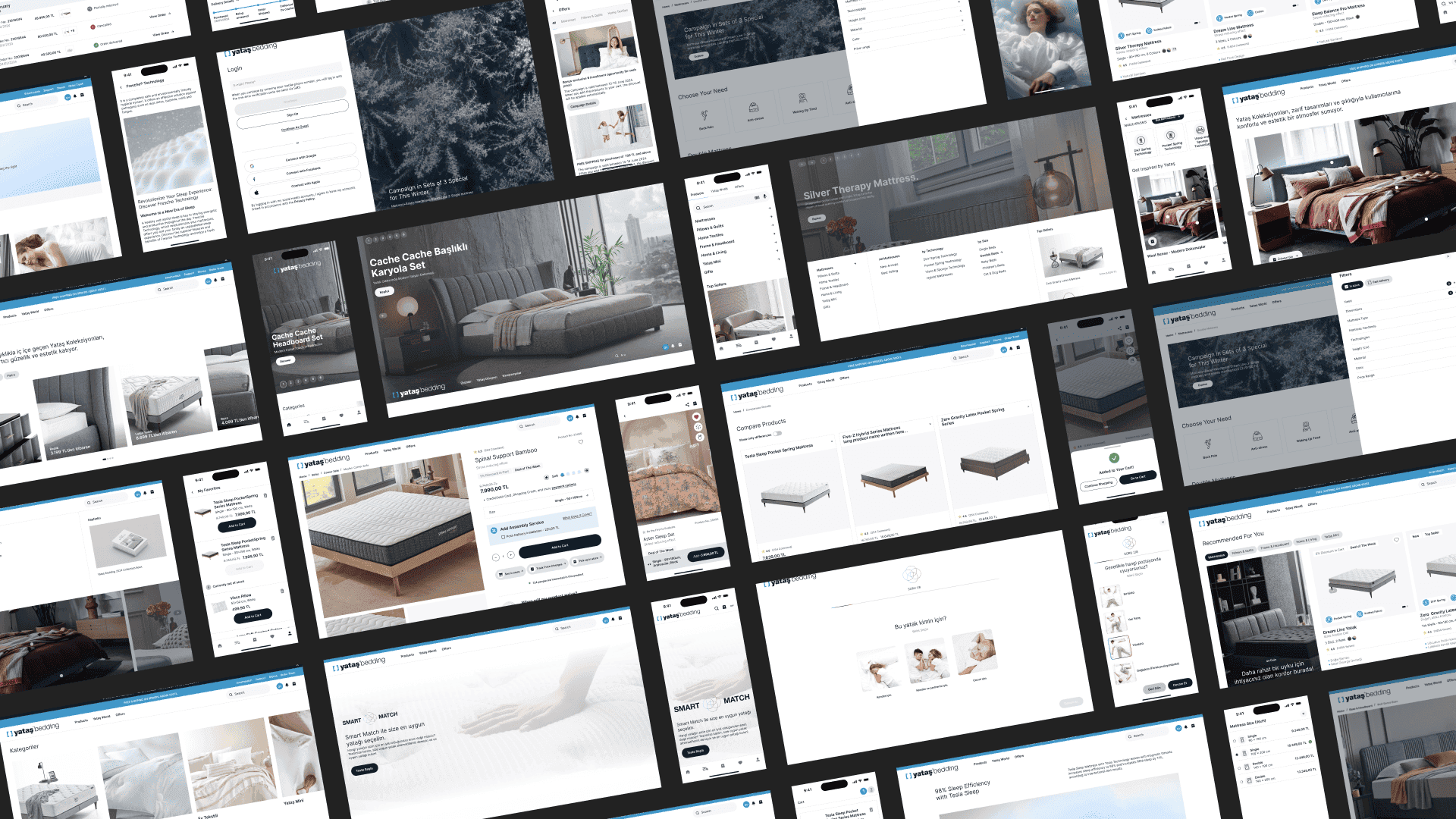
Yataş Bedding
Founded in 1976, Yataş Group has grown from a local mattress manufacturer into a multinational household name in Turkey. With a deep-rooted commitment to comfort, quality, and innovation, the brand has consistently evolved to meet the changing needs of modern living with several brands: Yataş Bedding, Enza Home, Divanev, and Puffy.
Client
Yataş Group
Products
Web & Mobile Web Design Mobile App Design
Year
2024
What I Did
Design Audit UX/UI & User Research Key UX/UI Design UX/UI Direction
project overview.
Challenge
As one of Turkey’s leading bedding and home textile brand, Yataş Bedding is known for its innovative approach to wellness-focused design. With decades of heritage, the brand combines quality craftsmanship with modern aesthetics to create a superior sleep experience.
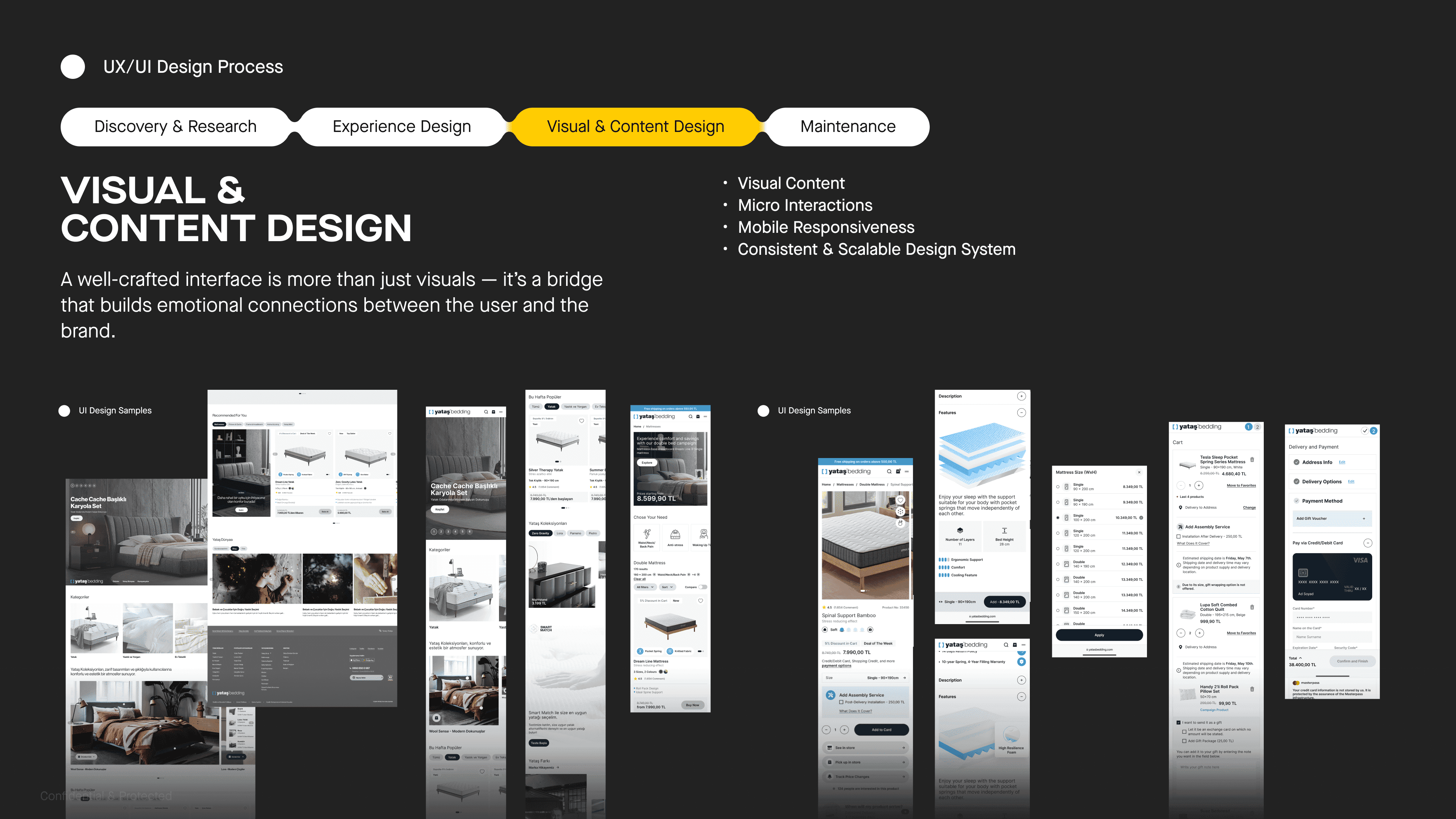
Yataş Bedding is continuously evolving with its innovative and functional design approach. In this redesign project, the brand sought to reflect its strong identity in the digital space through a user-centric experience — combining intuitive functionality, modular design, and a clean visual language that mirrors its contemporary take on comfort.
The project was ambitious in many ways. As a first step, we needed to establish a complete design system and user experience by taking Yataş Bedding as the master brand. In the second phase, we redesigned the websites of the other three brands — Enza Home, Divanev, and Puffy — based on the master design system we built for Yataş Bedding.
As an initial step, we moderated 3-day UX workshops with over 20 managers and stakeholders from all four brands under the Yataş Group. Each brand came with its own pain points, needs, and KPI expectations specific to e-commerce.
We mapped out and aligned these perspectives into a structured roadmap, which led to the creation of a prioritized feature matrix to steer the design and development process. Then we put together a project team with various skill sets to research, brainstorm, create, iterate and execute with the goal of creating a model website in the industry.
Business Objectives
Providing a smooth learning curve for enabling the discovery of new content and features.
Creating a scalable design to support future content releases and adaptation of the websites of the other three brands based on the master design framework.
Making the overall interface look and feel competitive with the top market players.
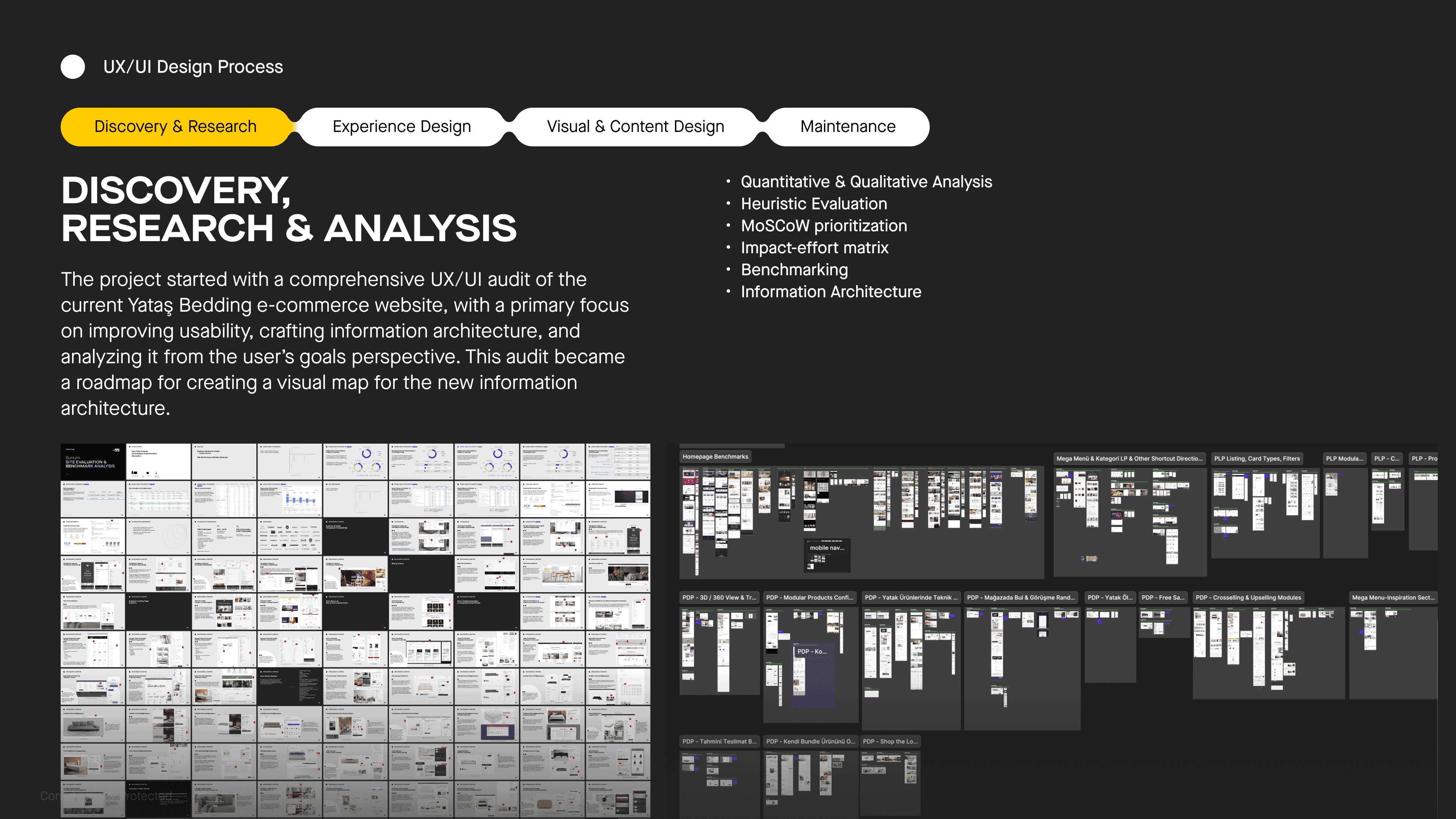
Drawing from what I learned during the workshops, I began the research and global benchmarking phase. I conducted a comprehensive analysis of the websites of major players in the bedding & home textile industry, outlining their feature sets, information architecture, UX/UI practices, and visual styles.
Based on these findings, I compiled a detailed benchmarking report, providing the Yataş team with valuable insights for informed design decisions moving forward.
Key Features & Improvements
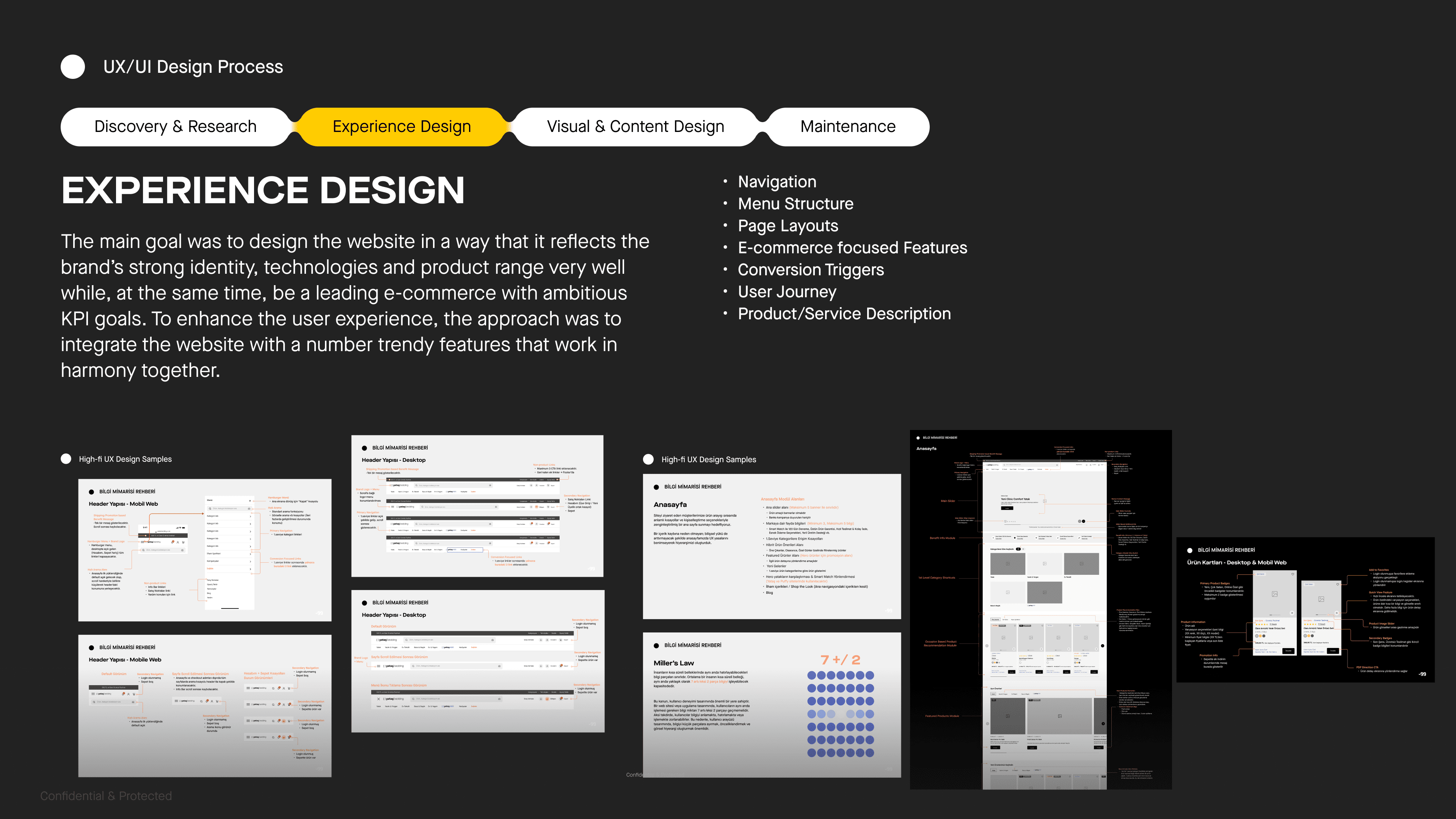
The main goal was to design the website in a way that it reflects the brand’s strong identity, technologies and product range very well while, at the same time, be a leading e-commerce with ambitious KPI goals. To enhance the user experience, the approach was to integrate the website with a number trendy features that work in harmony together. Such as:
A 'Shop the Look' module that lets users explore products directly from a styled scene, enhancing inspiration-to-purchase flow
"Smart Match" tool integration that help customers find the right product based on their needs without using any technical terms
Category specific product recommendation module for a flawless shopping experience
Single goto point of support and knowledge base with various inspirational content, technology-focused pages, and conversion trigger modules
Value-added content discovery — Sleep Academy, Blog, Social Responsibiliy and more
Streamlined one-page checkout experience designed for a seamless and user-friendly flow


summary.
results
It was a particularly challenging project — while some solutions were clear from the very beginning of the project, others emerged gradually as the project progressed and the design evolved. Understanding the brand’s product range, underlying technologies and fully immersing myself in the journey was important in order to empathize with users' decision-making process.
Working closely with product teams throughout the process helped me gain a deep understanding of the brand and its product categories, while also uncovering valuable insights into customer purchase journeys and behavioral patterns.
new experiences & learnings
As the UX Director and Designer, I was responsible for the overall UX/UI design process — from research and information architecture (IA) to wireframes of all core pages.
Over the course of a three-day UX workshop, I had the chance to collaborate with more than 30 participants from different departments.
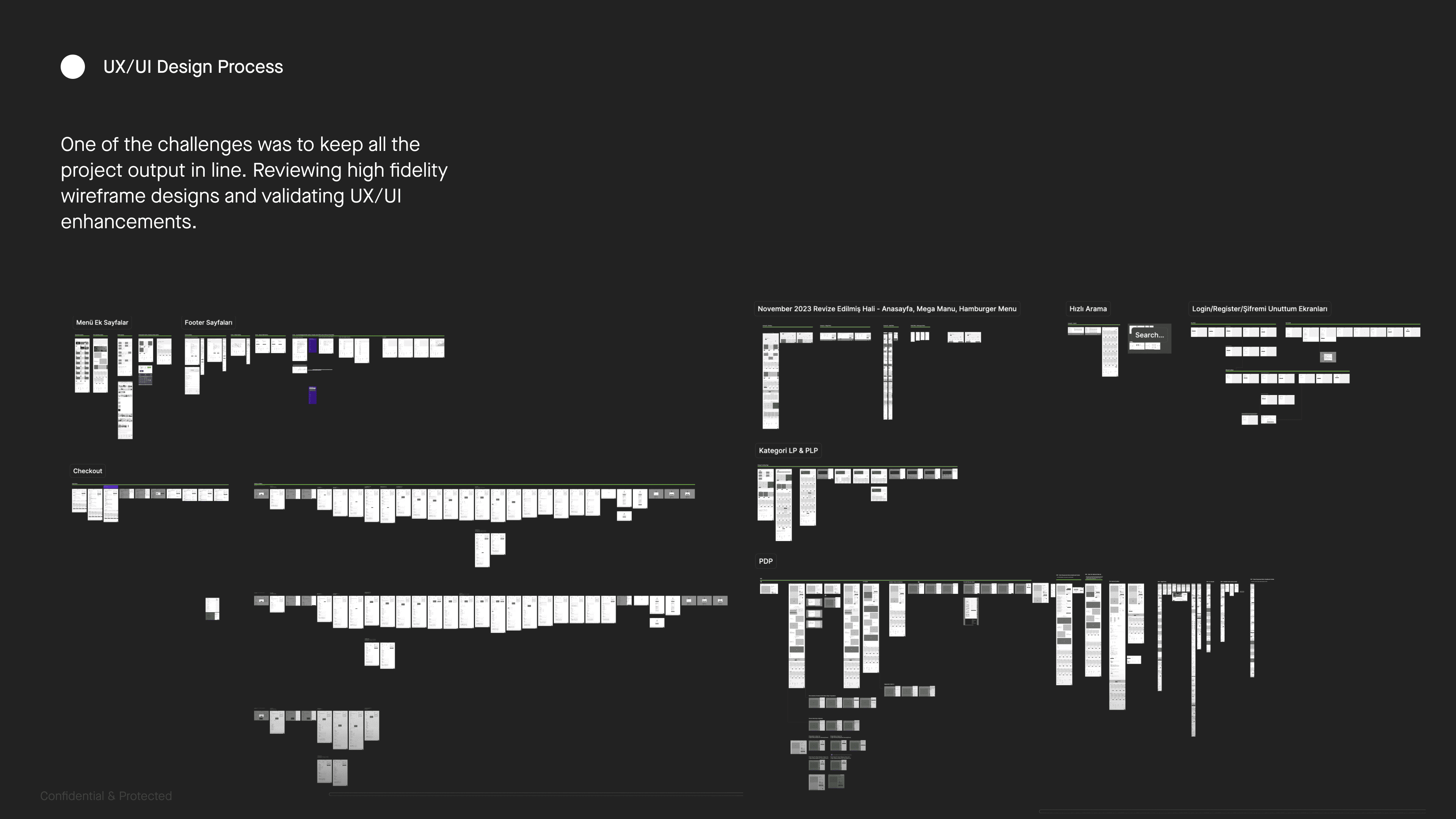
I had the opportunity to manage the redesign of a live website while backend infrastructure and technical preparations were still in progress. I created high-fidelity wireframes and final design layouts for key pages.