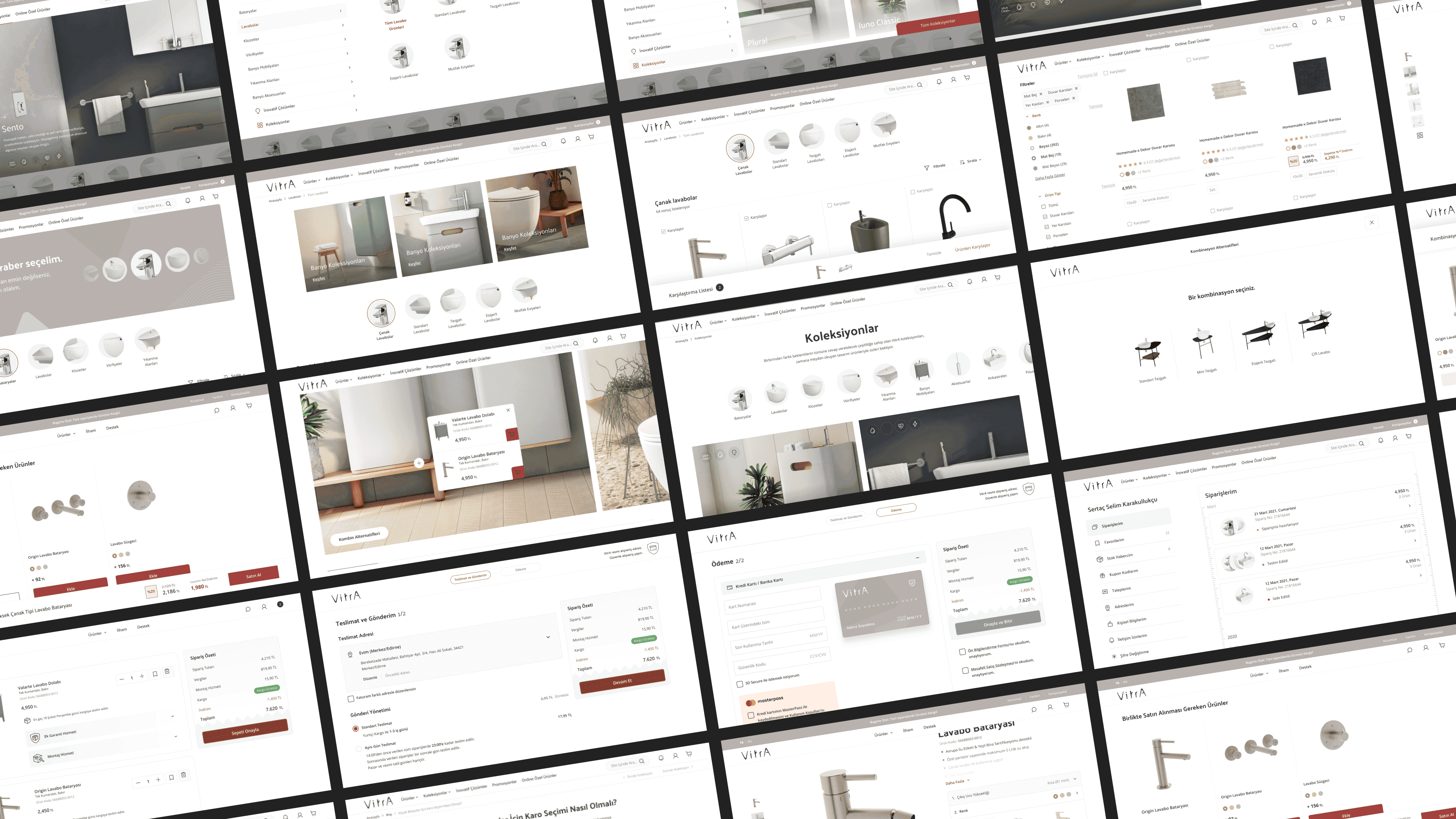
VitrA
Founded around 1942, VitrA defines the world of bathrooms as “rational, aesthetic, and equally sensitive” With over 60 years of experience, it holds the market leadership in Turkey in both bathroom and tile products, offering the industry's widest product range and largest production capacity.
Client
VitrA
Products
Web & Mobile Web Design
Year
2021
What I Did
UX/UI Research & Strategy Design Direction Key UX/UI Design Usability Tests

project overview.
Challenge
VitrA’s existing corporate website communicated the brand story and presented its product portfolio, yet lacked e-commerce functionality. Placing people at the center of its innovation efforts, the main challenge that was put forward by VitrA was “We will have the best e-commerce website in ceramic&sanitaryware industry brand”.
The goal was clear: to create a website entirely centered around the product portfolio, where different personas could explore inspiring ideas, discover solutions tailored to their needs, and complete purchases seamlessly online. This was a true challenge — it meant designing an entirely new digital experience from scratch.
I engaged in consultations with the VitrA team and SEO agency to gain a deep understanding of the project goals. Additionally, I communicated with developers to understand their capabilities and technical constraints.
Based on their takeaways, the project started with a comprehensive UX/UI audit of the current corporate website, with a primary focus on enhancing user-friendliness, crafting information architecture, and analyzing it from the user’s goals perspective.
I conducted a thorough analysis of both direct and indirect VitrA competitors' websites to assess their feature sets, information architecture, best UX/UI practices, and visual style. I got valuable insights on the best practices to adopt and areas to avoid. This audit became a roadmap for our design concept.
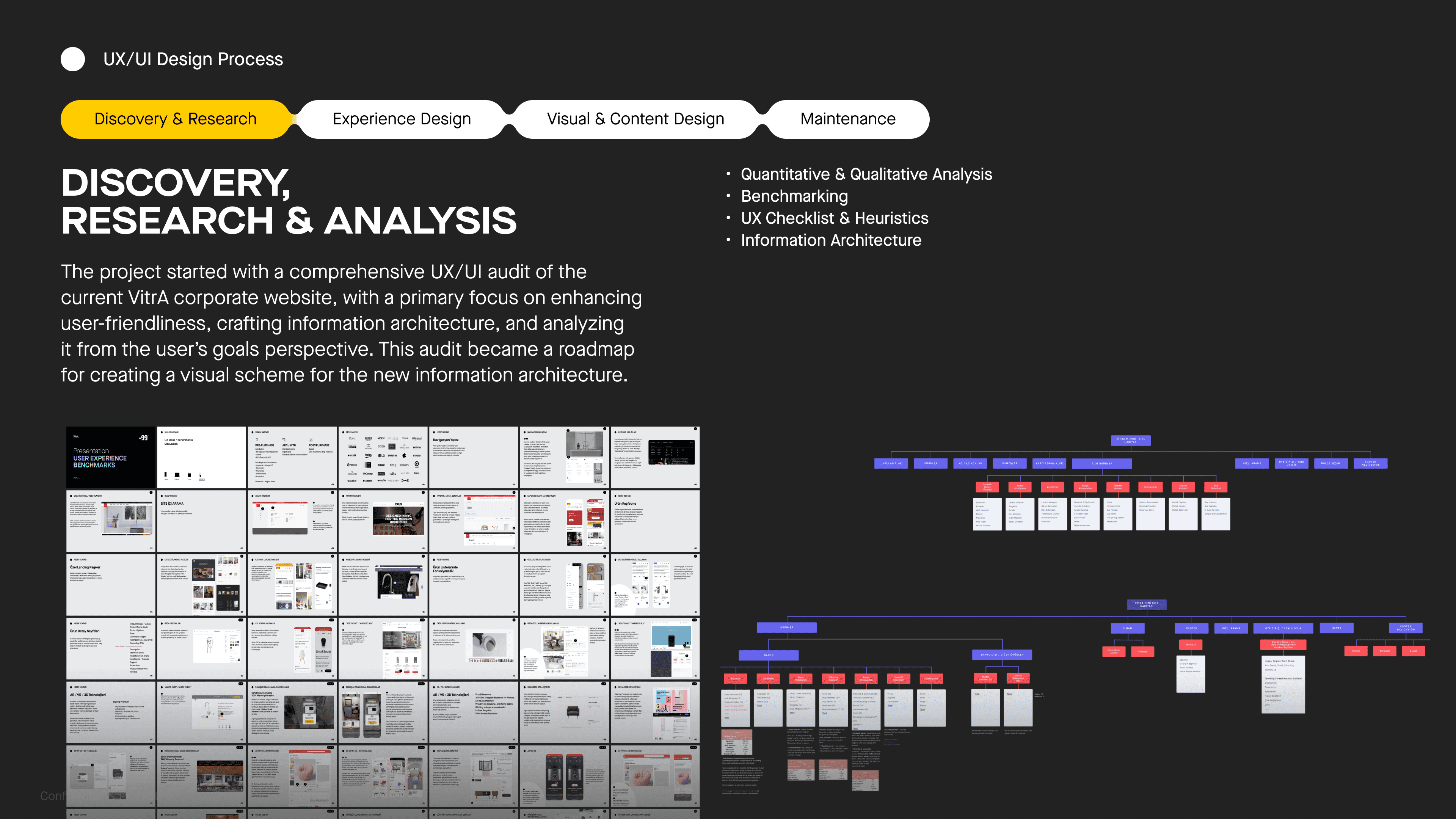
As an initial step, I created a visual scheme of the existing VitrA corporate website to map out all product categories and subcategories. Since the product range would remain unchanged for the new site, this scheme became the foundation for shaping the new sitemap
Analyzing the scheme, I identified structural inconsistencies and proposed improvements to the hierarchy. We also used the scheme to document proposed changes to the product categorization and information architecture, which were later reviewed and approved during the three-month workshop sessions in collaboration with the client and SEO agency.
Key Improvements
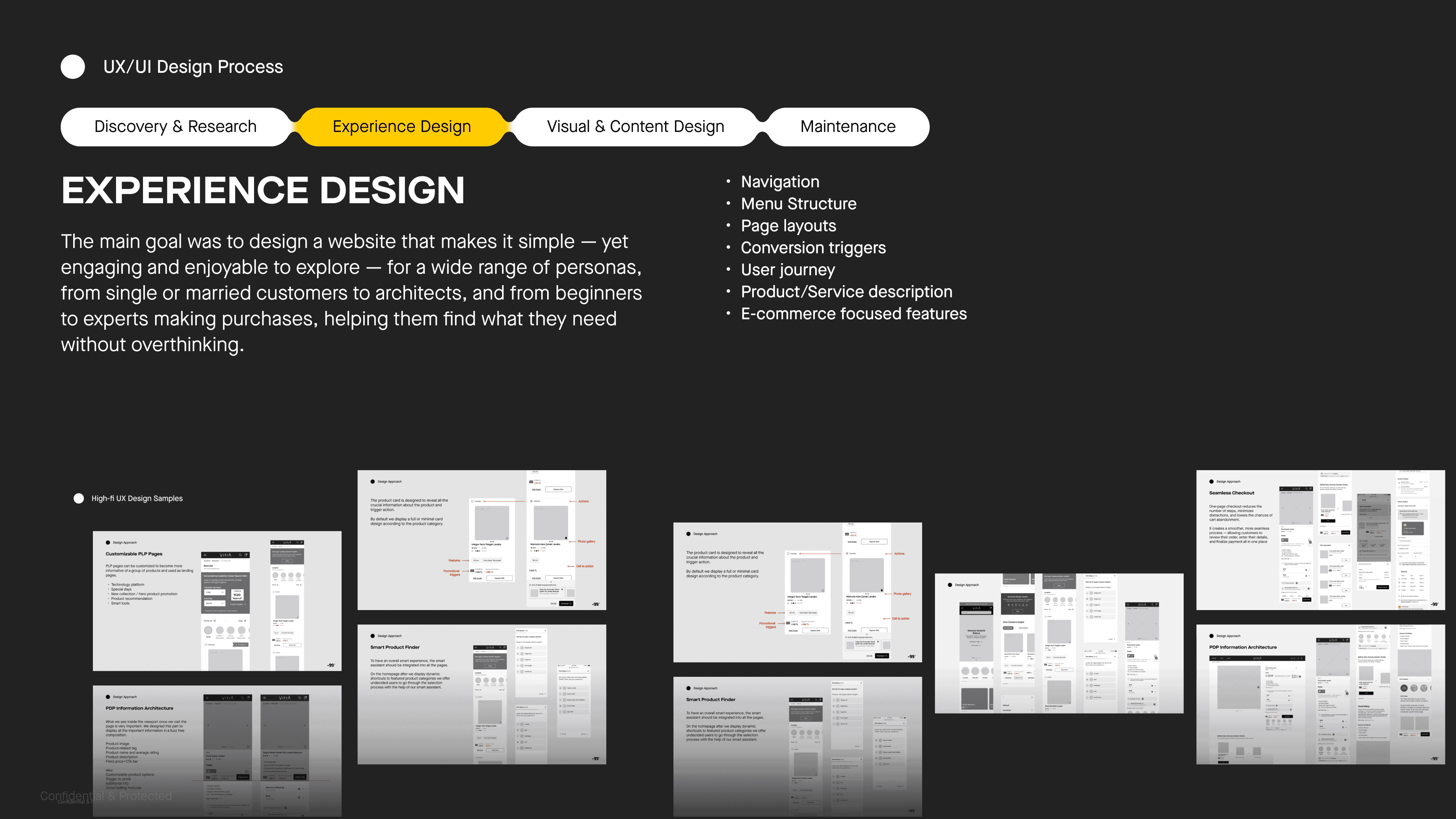
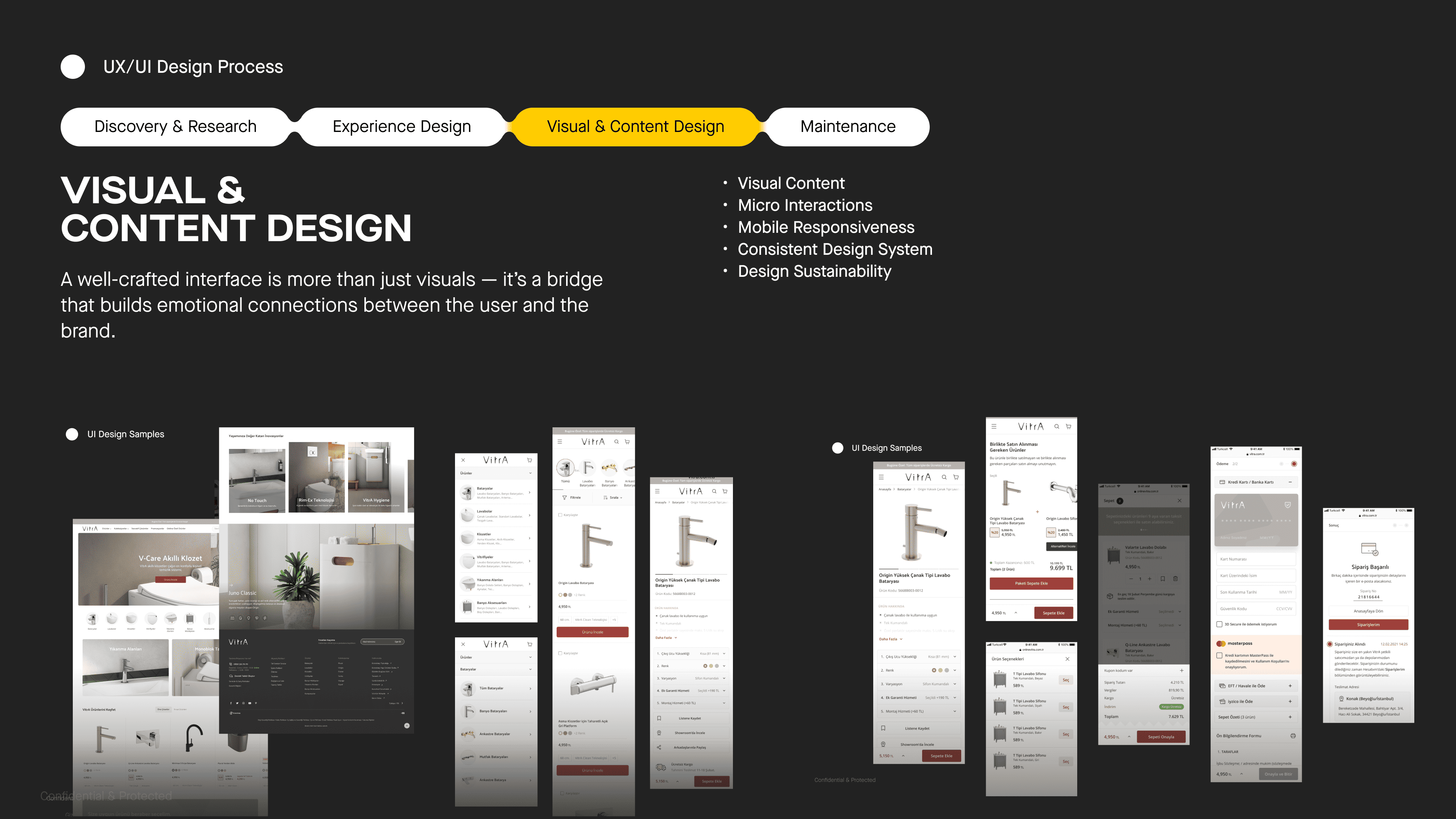
To maximize the user experience, beside the mobile optimized layout and user experience based design we enriched the website with a number trendy features that work in harmony together. Such as:
A product recommendation tool that help customers find the right product based on their needs without using any technical terms
Theme-based product lists inspired by living spaces
Smart complementary product recommendation module for a flawless shopping experience
Single goto point of support and knowledge base with various inspirational content, technology-focused pages, and pre-purchase / post-purchase support shortcuts
Value-added service recommendations — extended warranty, assembly service, and more
Personalized offers, notifications, and task flows
summary.
results
It was a very disciplined project for me, despite the heavy workload — from initial ideas, weekly brand workshop sessions to the final design. Understanding the product portfolio and fully immersing myself in the journey of inexperienced customers was crucial in order to empathize with their decision-making process.
Working closely with both product teams and the SEO agency helped me gain a deep understanding of the brand and its product categories, while also uncovering valuable insights into customer purchase journeys and behavioral patterns.
new experiences & learnings
As the UX Design Lead and Designer, I was responsible for the overall UX/UI design process — from research and information architecture (IA) to wireframes of all core pages and and prototype testing.
Over a three-month period, I moderated UX workshops with 30+ participants from different departments on the client’s team.
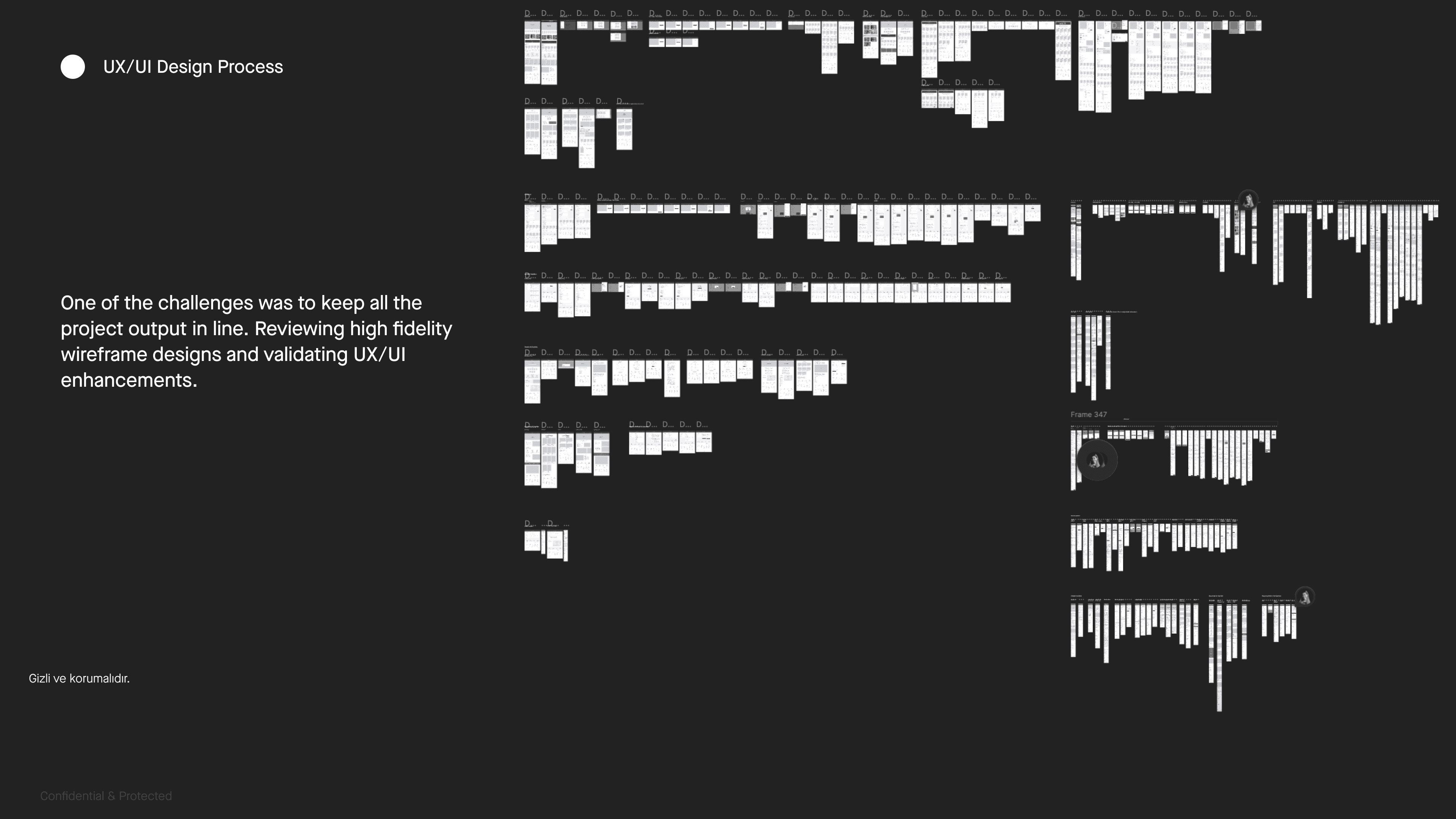
I created high-fidelity wireframes in accordance with studies-backed best practices in UX design and was the main presenter of the project to all stakeholders and development teams.
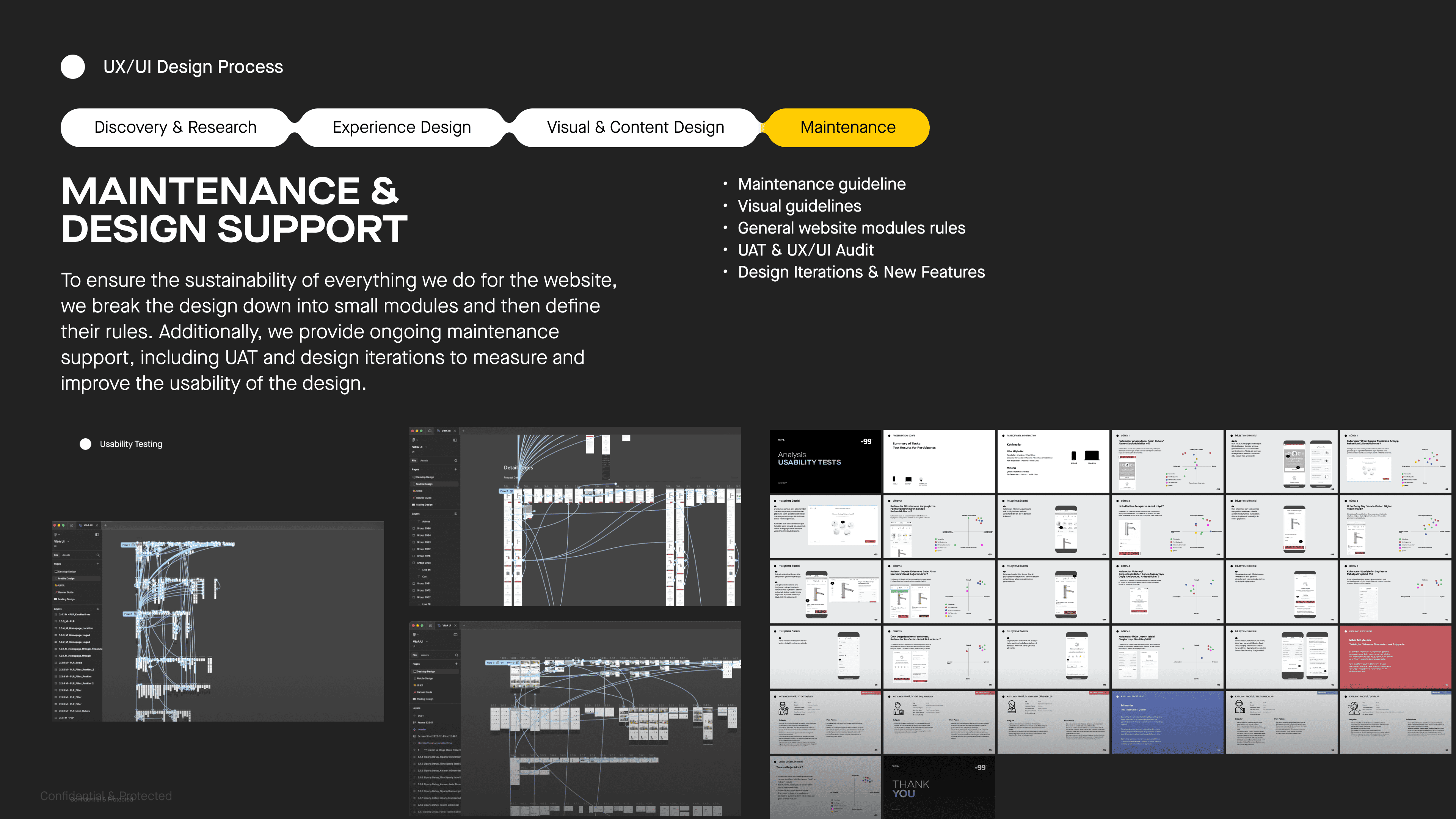
Conducted usability testing with 15 selected customers using task-based prototypes, and applied the findings to improve the website’s performance before launch.